Is doubt a sin, or part of a living faith?
Jesus: Doubt is one of those words that carries too much weight for its size. We speak it and immediately feel guilty, as if the mere presence of a question inside us were already a betrayal. But I would gently press back on that. The scriptures do not treat doubt as one flat thing. They hold it up to the light and turn it, and it looks different from different angles. Hear how Paul writes to the church in Rome, in the fourteenth chapter of his letter: the one who has doubts is condemned if he eats, because his eating is not from faith; and everything that is not from faith is sin.
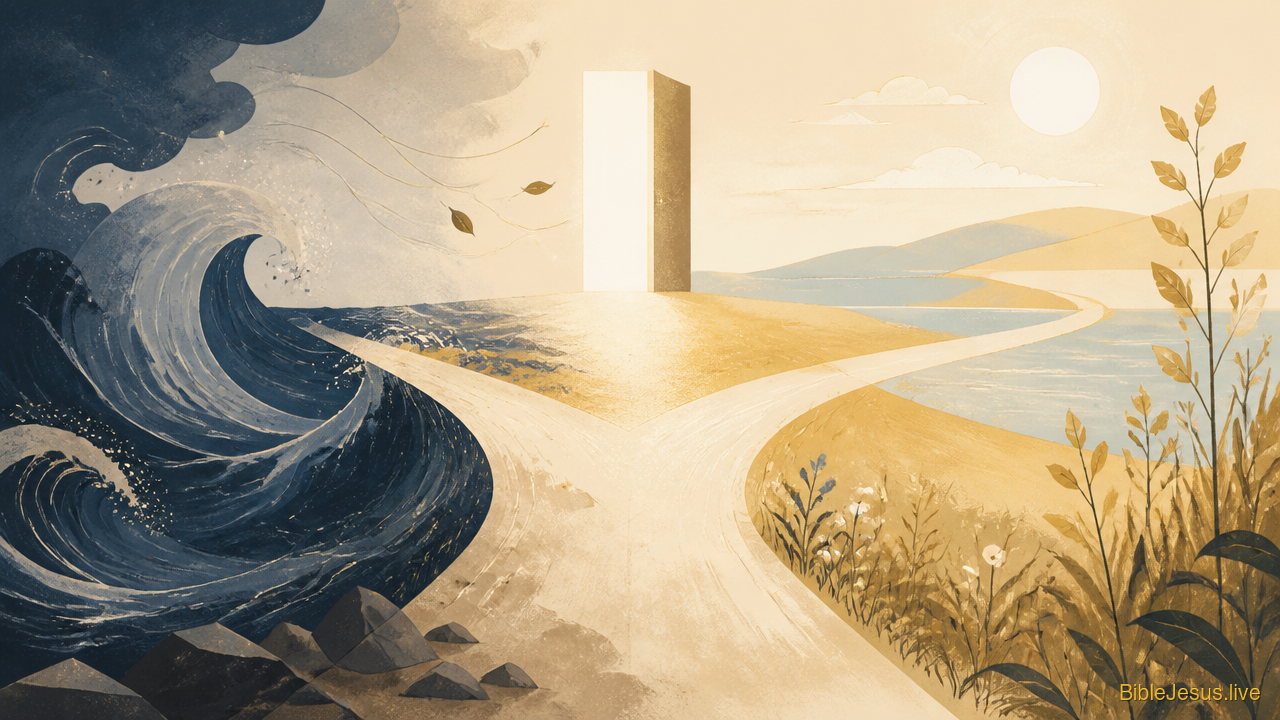
Now, read that slowly. Paul is not saying that doubt itself is sin. He is saying that acting against your own conscience is sin — going ahead with something while your heart is still unsettled about it. That is a very particular kind of doubt: the doubt that says I am not sure this is right, and yet I will do it anyway. That kind of double-mindedness wounds the soul. It is not the questioning that undoes you; it is the acting without integrity. James speaks similarly, though he sharpens the image. In the first chapter of his letter he writes: he who doubts is like a wave of the sea, blown and tossed by the wind.
Again, notice what he is describing. Not the honest wrestler. Not the one who kneels in the dark and says, I do not understand, help me understand. He is describing the one who cannot settle — who asks God for wisdom while inwardly refusing to receive any answer that would cost them something. That is instability, not inquiry. And later, in the second chapter, James says something even stronger: O foolish man, do you want evidence that faith without deeds is worthless?
Faith, for James, is not the absence of questions. Faith is what you do with your hands and your feet and your days. A living faith moves. Now consider how I met doubt in my own friends. When I stilled the storm and turned to the disciples in the boat, I asked them, Why are you so afraid? Do you still have no faith?
That was not a rebuke meant to shame them. It was a question meant to wake them. They had forgotten who was in the boat with them. And after the resurrection, when I appeared to them and they could not believe their eyes, I said, Why are you troubled, and why do doubts arise in your hearts?
I did not turn away from them for doubting. I showed them my hands. I ate a piece of fish in front of them. I met the doubt with presence. So here is what I would offer you. There is a doubt that is the beginning of honesty — the doubt of the disciple who says, Lord, I want to see more clearly. That doubt is not the enemy of faith. It is often the doorway. And there is a doubt that is the refusal to trust anything or anyone, the wave that will not rest — and that kind, over time, hollows a person out. The question, then, is not do I have doubts? Everyone who has ever loved God has had them. The question is: what do I do with them? Do I bring them into the light? Do I speak them to God the way the psalmists did, unvarnished? Do I keep walking, keep serving, keep loving my neighbour, even while the questions travel with me? Because a faith that walks with its doubts is still walking. And that, I would say, is very much alive. Where do your own doubts sit tonight — are they the honest kind that draw you closer, or the restless kind that will not let you rest?
This conversation was had on BibleJesus — Talk with Jesus yourself — free on iOS ✝️